Claudia Breger
Claudia Breger is the Villard Professor of German and Comparative Literature. Her research focuses on twentieth- and twenty-first century culture, with emphases on film, literature, and theater; literary, media, and cultural theory; and the intersections of gender, sexuality and race. She is particularly interested in combining theory with historical perspectives, and in studying the interplay of aesthetics and politics in nuanced ways that do not sacrifice one for the other.
Prof. Breger’s new book, entitled Art’s Assemblies: Political Aesthetics in Transatlantic Dialogue (Stanford University Press, October 2026), makes a case for art's power to act politically in significant ways. The book recasts political aesthetics for our terrifying present by way of a multiway dialogue between the tradition of political aesthetics that German (émigré) Critical Theorists developed in response to historical fascism and twenty-first century work in new materialism, neo-Marxism, Black radical thought, affect, and queer studies. As acts of political alignment as well as imaginative prefiguration, art's assemblies bring together heterogeneous elements and actions in (polyphonic) “political concert.” This includes how artworks track and trace pieces of real-world materials even in fantastic contexts; how they work through unfinished histories of violence and dehumanization by animating archival documents; how they fabulate different histories without engaging in the forging actions of fake news; and how they counter the accumulated nightmares surrounding us through practices of dreaming interwoven with actions of drafting or demanding different futures.
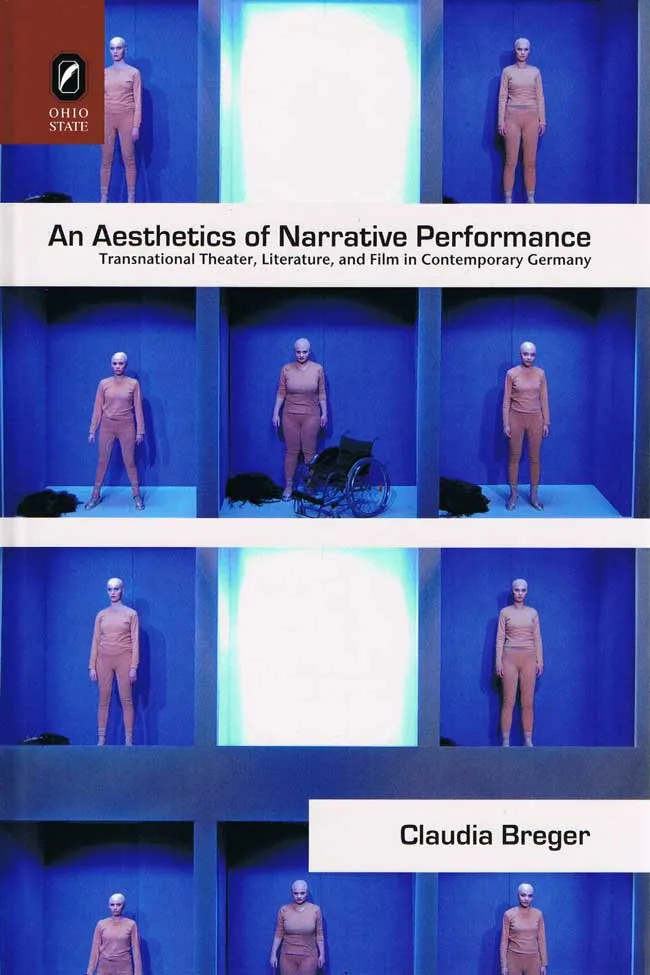
Prof. Breger’s previous book, Making Worlds: Affect and Collectivity in Contemporary European Cinema, was published by Columbia University Press (2020). The study develops a syncretic concept of cinematic worldmaking that connects affect studies to questions of narrative and form. Prof. Breger deploys this concept to show how contemporary cinema can work through heightened public affects in complex scenarios that reimagine collectivity in more inclusive ways. Her earlier An Aesthetics of Narrative Performance (Theory and Interpretation of Narrative, Ohio State University Press, 2012) seeks to reconcile the fields of narratology and performance studies, conceptualizing contemporary aesthetic practices in different media.
Prof. Breger’s German-language books include the smaller volume Nach dem Sex? (Hirschfeld-Lectures; Wallstein, 2014), which probes methodological dialogues between queer turn-of-the-twentieth century sexology and twenty-first century affect studies, along with her earliest two monographs: Ortlosigkeit des Fremden (Böhlau 1998) traces the genealogy of modern representations of Romani and other itinerant people at the intersection of race and gender around 1800; and Szenarien kopfloser Herrschaft (Rombach 2004) investigates reconfigurations of royal imaginaries beyond sovereignty in twentieth-century German culture, in scenarios ranging from imperial Egyptology to queer drag king performances.
A full list of Prof. Breger’s publications can be found here.